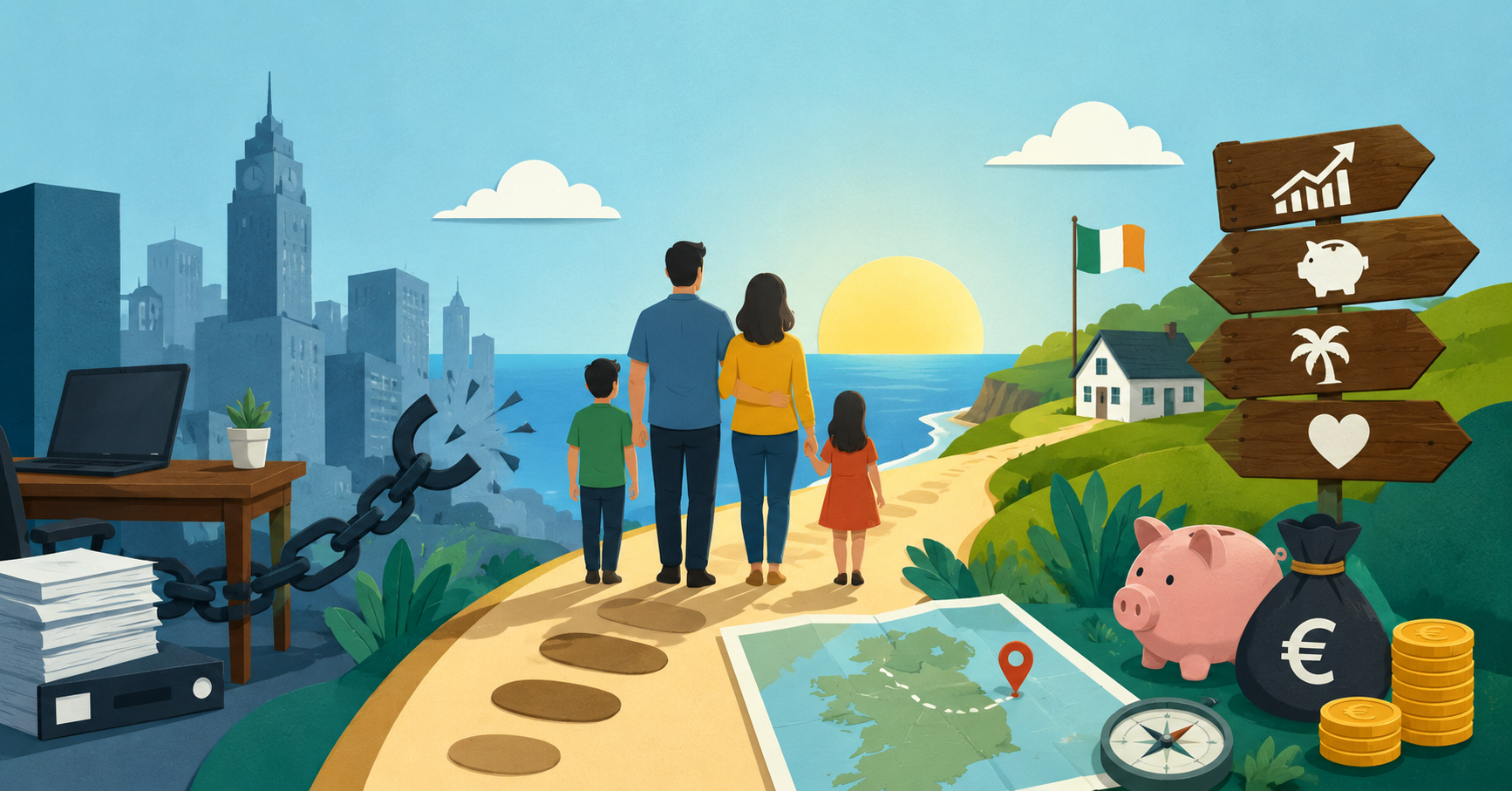
Pursuing financial independence with children in Ireland is a transformative journey. While the costs of raising a son or daughter are significant, the freedom to reclaim your time is an invaluable benefit. Many parents now choose the FIRE path to ensure they are present for every milestone. This article explores how families can balance a high savings rate with the needs of a growing household, proving that retirement before a traditional age is achievable even with the specific tax and cost challenges of the modern Irish lifestyle.
The Core Framework for Families

The traditional FIRE movement often focuses on individuals, but parents require a more nuanced strategy. Different plans allow for varying levels of work and life balance.
Strategic Paths to Freedom
- Lean FIRE: Focuses on extreme frugality and minimal spending. In Ireland, this often involves living in areas with lower housing costs and avoiding high-cost private services.
- Fat FIRE: Aimed at those who want a larger nest egg to cover private education, premium housing, and luxury travel.
- Coast FIRE: This involves front-loading savings early so that investments grow enough to fund retirement later. This allows a parent to shift to a lower-stress part-time job while the kids are young.
- Barista FIRE: A middle ground where you leave your full-time career but keep a low-intensity job for supplemental income. While the HSE provides public healthcare, many use this income to maintain private health insurance.
The Mathematics of Family Security
The “Rule of 25” is the standard metric: you need to save 25 times your annual expenses. For parents, this number must account for future costs like third-level education or a larger car. By applying the 4% withdrawal rule, you can create a sustainable income stream from your portfolio, though Irish investors often aim for 3.25% to account for specific tax risks.
Assessing Child-Related Costs in Ireland (2026)
Every decision on the path to FIRE is influenced by the cost of raising children. In 2026, families must be precise with their budgeting to maintain a high savings rate despite high childcare and housing costs.
Estimated Cumulative Costs to Age 18
| Expense Category | Frugal Approach (€) | Standard Approach (€) | Premium Approach (€) |
| Essential Goods (Food/Clothing) | €65,000 | €105,000 | €150,000 |
| Childcare (Pre-school/After-school) | €15,000 | €55,000 | €120,000 |
| Education (Primary/Secondary) | €5,000 | €15,000 | €200,000+ (Private) |
| Housing & Utilities (Added space) | €35,000 | €60,000 | €100,000 |
| Total per Child | €120,000 | €235,000 | €570,000+ |
Note: Figures are estimates based on 2026 Irish market data, including the impact of the National Childcare Scheme (NCS) fee caps.
Large housing costs often represent the biggest hurdle in Ireland. Successful FIRE families often look at lifestyle choices like moving to the West or Midlands where property prices are lower than in Dublin.
Maximising the Family Savings Rate
Boosting your savings is the fastest way to reach freedom. This requires consistent effort and smart decisions regarding daily spending.
Smart Housing and Location Choices
Housing usually takes the largest part of a person’s income. Many on the FIRE journey opt for “geo-arbitrage” within Ireland, choosing to live in areas with lower property costs but great amenities for children. This significantly lowers the required retirement total.
Values-Based Frugality
Being frugal doesn’t mean depriving your kids. It means being intentional with your money.
- The Second-Hand Economy: Buying high-quality items and toys from resale sites like Adverts.ie or DoneDeal saves thousands.
- Experience-Led Living: Focus on low-cost projects and outdoor activities (like the many free national parks) rather than expensive material things.
- Insurance and Risk: Ensuring you have the right life and disability insurance protects your family from unforeseen events.
Long-Term Investment and Education Planning
A major point of concern for parents is the cost of third-level education. Balancing your retirement goals with your child’s future is a delicate act in the Irish tax system.
The Challenge of Investment Taxation
Unlike the UK, Ireland does not have an ISA. Parents must navigate:
- Deemed Disposal: If you invest in ETFs for your child, you are taxed on unrealised gains every 8 years at a rate of 38% (as of 2026). This “tax drag” requires careful planning.
- Small Gift Exemption: Parents can gift up to €3,000 per year to each child tax-free. This is often used to fund a bare trust or a specific savings account for college.
Third-Level Costs
The Student Contribution Charge is currently €2,500 per year (as of 2026). While lower than UK tuition, the cost of accommodation in cities remains a significant expense for families to plan for. Many FIRE parents choose to save specifically for these costs using a “Sinking Fund” approach.
Managing Expectations and Mindset

The experience of FIRE with a family is psychological. It requires a shift in how you view success and contentment.
Involving Children in the Journey
Openly discussing money and financial goals helps children understand why certain decisions are made. This transparency builds their own financial independence and sets realistic expectations for their lifestyle.
Avoiding the Burnout Trap
The effort required to reach FIRE shouldn’t come at the cost of your current happiness. If the grind is too intense, the purpose of the journey is lost. Coast FIRE is often a better point for families, allowing parents to work less while their children are still young.
Conclusion
Achieving FIRE with kids in Ireland is a marathon that rewards the entire family with the gift of time. While the costs and tax risks are higher than a solo journey, the freedom to choose your lifestyle and be present for your children is an incomparable growth opportunity.
By balancing a disciplined savings rate with mindful spending and strategic investments, you can secure a future that prioritises life over work. The path to financial independence is about building a lasting legacy of security and shared experiences.
Frequently Asked Questions (FAQs)
Is it actually possible to achieve FIRE with multiple children?
Yes, though it requires a flexible strategy. While children increase expenses, many Irish families succeed using Coast FIRE. This allows you to scale back work once investments are sufficient to grow independently for future retirement.
How does having kids affect the 4% withdrawal rule?
The 4% rule is a benchmark, but parents often add a safety margin. Due to Deemed Disposal tax in Ireland and volatile family costs, many aim for a 3.25% withdrawal rate for extra security.
Should I prioritise my retirement savings or my child’s college fund?
Prioritise your retirement first. Children can access grants (like SUSI) or loans, but no such support exists for retirement. Securing your financial freedom ensures you won’t become a financial burden on your children.
Does FIRE with kids mean living a life of total deprivation?
No, it is about “valueist” spending. You cut costs on things that do not matter to fund everything that does, like family travel and hobbies. It is a lifestyle decision focused on freedom.
What happens if the market crashes shortly after we retire early?
This risk is managed with a cash buffer. Families should keep two years of expenses in a liquid account or maintain a part-time job (Barista FIRE) to avoid selling assets during a market downturn.
Sources
- https://www.cost-saver.co.uk/blog/cost-of-raising-child-myths-vs-facts-uk
- https://finance.yahoo.com/news/fire-sounds-great-paper-heres-143012377.html
- https://medium.com/money-resolution/how-to-achieve-financial-independence-retire-early-with-kids-4eec05d21a1e
- https://www.morningstar.com/news/marketwatch/2026031689/these-parents-did-the-impossible-retired-in-their-30s-while-raising-young-kids