Deciding on a business structure is perhaps the most significant decision a business owner will make in 2026. Whether you are starting a small business in the United Kingdom, Germany, Spain, or Portugal, the choice between a limited liability company and a sole proprietorship defines your risk, tax flexibility, and management style. This article serves as an in-depth guide to help small business owners navigate the differences, pros, and cons of each entity type.
1. The Simplicity of the Sole Proprietorship
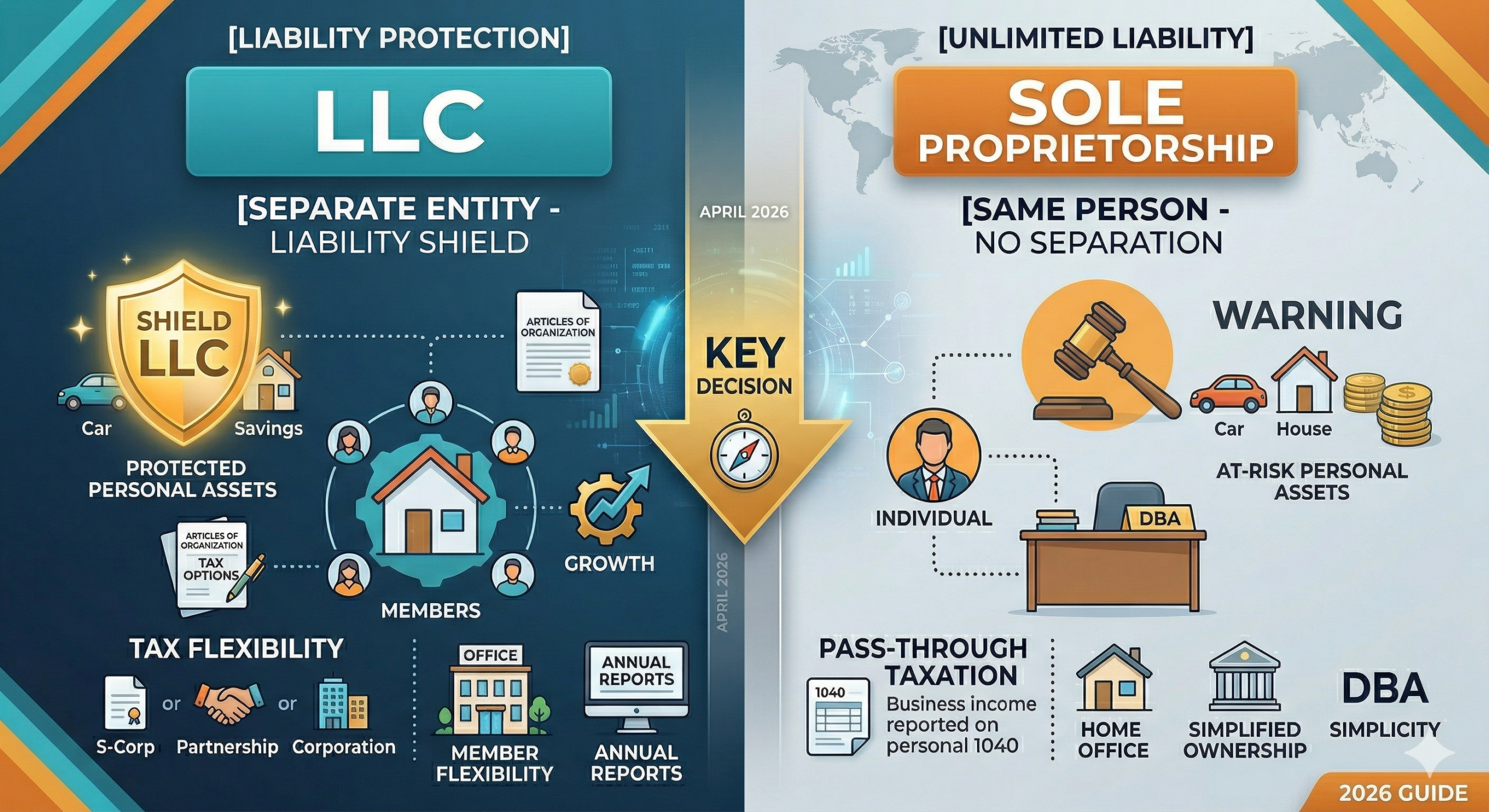
A sole proprietorship is the most common business structure for an individual entrepreneur. In a sole proprietorship, the proprietor and the business are seen as the same legal person. This simplicity is one of the primary advantages for many proprietors. However, this way of doing business means there is no separation between personal assets and business liabilities.
Understanding the Proprietor’s Role
Every proprietor must realize that in a proprietorship, the owner has total control over operations. From a tax perspective, the proprietorship is a “pass-through” entity, meaning business income and losses are reported on the owner’s personal tax return. While the paperwork and setup costs are low, the proprietorship lacks liability protection. If the business incurs debts or faces lawsuits, the individual proprietor is personally responsible for those obligations.
2. The Power of the Limited Liability Company (LLC)
An llc (or limited liability company) is a business entity created under state laws. The primary benefits of an llc include liability protection and tax flexibility. Unlike proprietorships, llcs provide a legal separation between the members and the company. This means the personal assets of the owners (like a car or savings accounts) are generally protected from business debts and creditors.
How an LLC Functions
In an llc, the owners are called members. A member can choose a management structure that fits their needs. The articles of organization is the formal document filed with the secretary of state to form the entity. Furthermore, an operating agreement is a crucial document that outlines how decisions are made and how profits and losses are distributed among members.
3. Comparing Liability, Risk, and Protection
The difference in liability is the biggest factor in this decision. In a sole proprietorship, liability is unlimited. If your small business in Portugal, Germany, Spain, or the United Kingdom faces a lawsuit, your personal money is at risk. Conversely, an llc offers a level of protection that shields the individual from the company’s liabilities.
Liability and Debt Scenarios
| Feature | Sole Proprietorship | Limited Liability Company (LLC) |
| Liability | Unlimited Personal Liability | Limited Liability Protection |
| Assets | Personal and Business Assets merged | Clear Separation of Assets |
| Debts | Owner responsible for debts | Entity responsible for debts |
| Legal | Lawsuits target the person | Lawsuits target the entity |
In each case, whether in the United Kingdom, Germany, Spain, or Portugal, the risk of business debts should be on your mind. Creditors can pursue the proprietor’s personal bank account, whereas llcs provide a shield. This liability protection is why many businesses eventually transition to an llc structure.
4. Taxation and Financial Reporting
Taxation is another complex area. In a sole proprietorship, you file a single income tax return. The irs treats the business income as the owner’s income. For an llc, you have more options. You can choose taxation as a sole proprietor, a partnership, an s corporation, or a c corporation. This tax flexibility is one of the great pros of the llc.
Tax Returns and Filing Requirements
-
Sole Proprietorship: Simple tax return filing; no separate entity tax.
-
LLC: Can choose s corporation status to save on self-employment taxes.
-
Corporation: More complex reporting and costs.
Small business owners in Portugal, Germany, Spain, and the United Kingdom must stay informed through a newsletter or news reports regarding tax implications. Whether you use an app, a platform, or specialized accounting tools, keeping your finances in order is essential. The employer identification number (ein) is often required for filing and opening a business bank account.
5. The Process: Steps to Setup Your Business
The process of setup varies by state and country. For a sole proprietorship, the steps usually involve getting a business name (often a dba) and necessary permits. For an llc, the steps are more formal, involving the secretary of state, articles of organization, and fees.
Setup Checklist
-
Research: Use youtube, articles, and online content to understand your options.
-
Name: Check business name availability in your area.
-
Paperwork: File the document with the secretary of state.
-
EIN: Apply for an employer identification number with the irs.
-
Banking: Open a business bank account and savings accounts.
-
Agent: Appoint a registered agent for your llc.
In each step, individuals might need assistance from consultants or a legal service. The cost and fees for filing vary between states. For instance, filing an llc in some states requires annual reports and additional paperwork, while proprietorships have almost no recurring requirements.
6. International Perspectives: Portugal, Germany, Spain, and the UK
If you are an entrepreneur in Europe, specifically in Portugal, Germany, Spain, or the United Kingdom, the concept of limited liability remains the same, though the name of the entity changes. In Portugal, you might look at a “Sociedade Unipessoal”. In Germany, the “GmbH” is a popular choice. Spain and the United Kingdom also have their own versions of llcs and corporations.
Global Business Management
Running a venture in Portugal, Germany, Spain, or the United Kingdom requires knowledge of local laws. Owners in Portugal must deal with specific reporting standards. In Germany, the efficiency of management is highly valued. Spain offers great flexibility for consultants. The United Kingdom is known for its simplicity in small business setup. Each area has its own permits, contracts, and banking issues.
7. Pros & Cons
The Decision Mindset
Making a decision requires a clear mind. Small business owners must weigh the differences. The choice is yours. Every entrepreneur has different needs. In one case, a sole proprietorship is best. In another situation, an llc is the right option. Research is the first step. Use the tools available on our platform. Our team provides guidance.
Liability and Protection
Liability is a major risk. Protection is the goal. Liability protection shields your savings. Lawsuits can destroy a venture. Personal liabilities are scary. Business debts should stay with the company. LLCs provide limited liability. Proprietors face unlimited risk. Creditors want their money. Liabilities are a part of every business.
Financial Matters: Money, Taxes, and Profits
Taxes are unavoidable. Your tax return is due annually. Taxation depends on your entity type. Profits are why we start businesses. Losses can happen to anyone. Capital is needed for investment. Funding helps your business grow. Loans are a common way to get money. Keep your finances in a business bank account. Use accounting services to track your income.
The Entity and Structure
Choose your business structure wisely. A business entity like an llc is a separate person in the eyes of the law. Entities like corporations, s corporation, and c corporation are complex. Proprietorships are for the individual. Partnerships involve partners. Businesses come in many types. Business structures affect your credibility. The same structure won’t work for all. Management of the entity is key.
Administrative Details: Documents, EIN, State
File your articles of organization with the secretary of state. Get your employer identification number from the irs. Every document must be correct. States have different fees. The secretary of state handles filing. Your articles of organization define the member rights. The irs tracks your ein. Documents are a huge part of the paperwork. The secretary of state website is a good tool. Your ein is like a social security number for your company.
8. Conclusion: Your Way Forward
The decision between an llc and a sole proprietorship comes down to liability protection, simplicity, and taxes. If you want protection and credibility, the llc is the clear winner. If you want the lowest cost and least paperwork, the sole proprietorship is your choice.
Whether you are in Portugal, Germany, Spain, or the United Kingdom, always do your research. Use the platform, watch youtube, and read our articles to stay informed. Your success as a business owner depends on these early decisions. Good luck with your venture, and remember to keep your finances, assets, and profits organized!
For more tips, subscribe to our newsletter or check the news on our page. We are here to help you with the steps, the process, and the management of your small business.
Which business structure are you currently leaning toward for your new venture?