Security operations have reached a breaking point. The average enterprise SOC now ingests somewhere between one and five billion events per month, and analysts are expected to make accurate triage decisions on a firehose of alerts where the true-positive rate rarely climbs above five percent. Traditional SIEMs were never built for this volume, and the first wave of “AI-powered” bolt-ons did little more than add a chat window on top of the same log aggregator. The market has moved on, and so has the conversation. The real question in 2026 is not whether to add AI to your SIEM, but how tightly your detection, triage, investigation, and response layers can be stitched into a single reasoning fabric.
This post walks through the integration models that actually hold up in production, the vendors worth serious evaluation, and the architectural choices that separate a helpful assistant from a genuinely autonomous SOC.
Why SIEM and SOC Integration Is the Real Problem
Most security teams already have a SIEM. They already have an EDR, a cloud posture tool, an identity provider, a handful of SaaS detection feeds, and probably a SOAR platform that someone spent a painful quarter configuring. The gap is not data collection. The gap is what happens between the alert firing and the analyst closing the ticket.
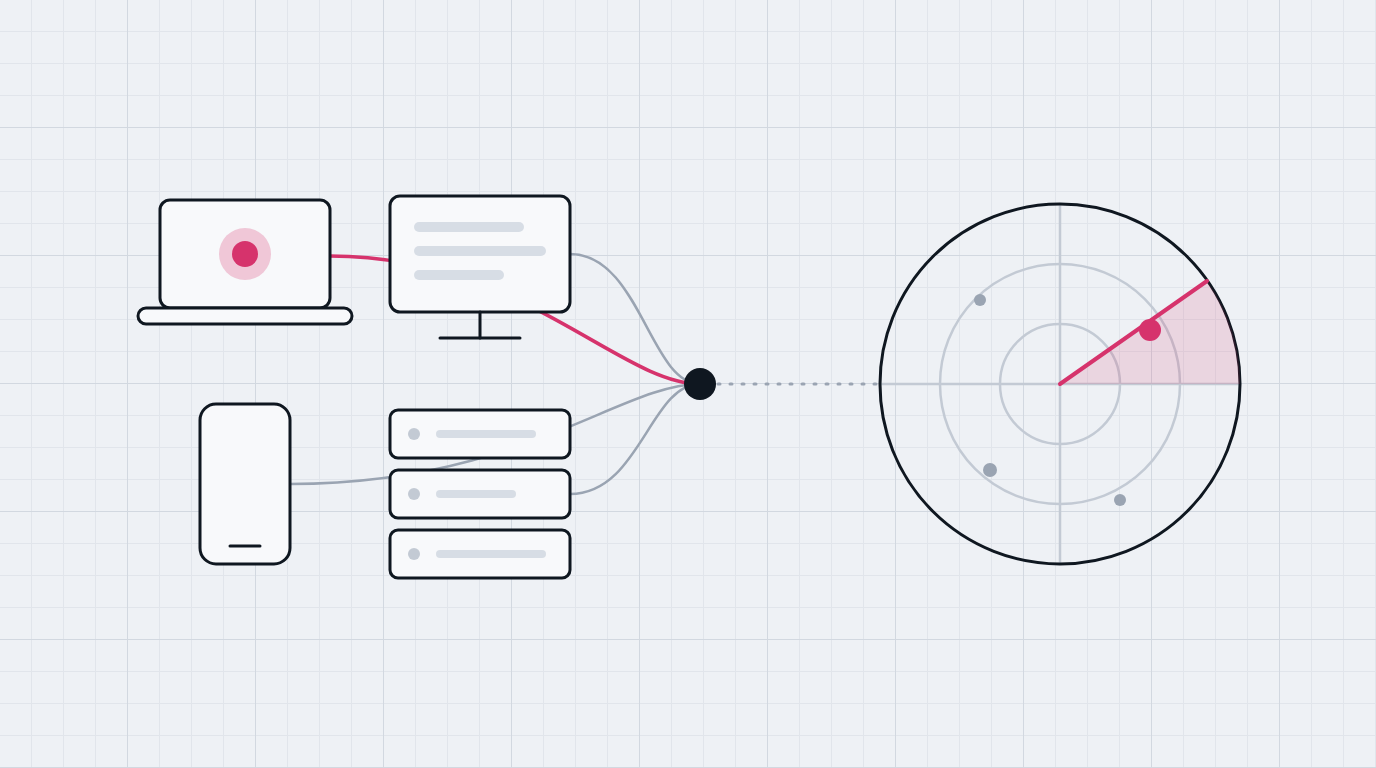
A well-integrated AI SOC layer has to do four things at once. It has to read telemetry from the SIEM without demanding a rip-and-replace migration. It has to enrich alerts with business context that lives outside the SIEM, usually in identity systems, ticketing platforms, and cloud control planes. It has to run an investigation that would have taken a Tier 2 analyst forty minutes, and do it in under two. And it has to hand the result back to the human in a form that is auditable, explainable, and trustworthy enough to act on.
That last point is where a lot of vendors quietly fall down. Any LLM can summarise an alert. Very few can show you the reasoning chain, the queries they ran, the hypotheses they discarded, and the evidence for the verdict they reached.
The Architectural Split: LLM-Only vs. Multi-Model
Before looking at specific vendors, it is worth understanding the architectural fork in the road.
LLM-only platforms route alerts through a large language model, give the model access to a handful of tools, and let it reason its way to a verdict. This works surprisingly well for straightforward phishing and commodity malware alerts, where the investigation pattern is well trodden. It tends to struggle when the dataset gets large, when the investigation requires precise correlation across billions of events, or when hallucination risk becomes a compliance problem.
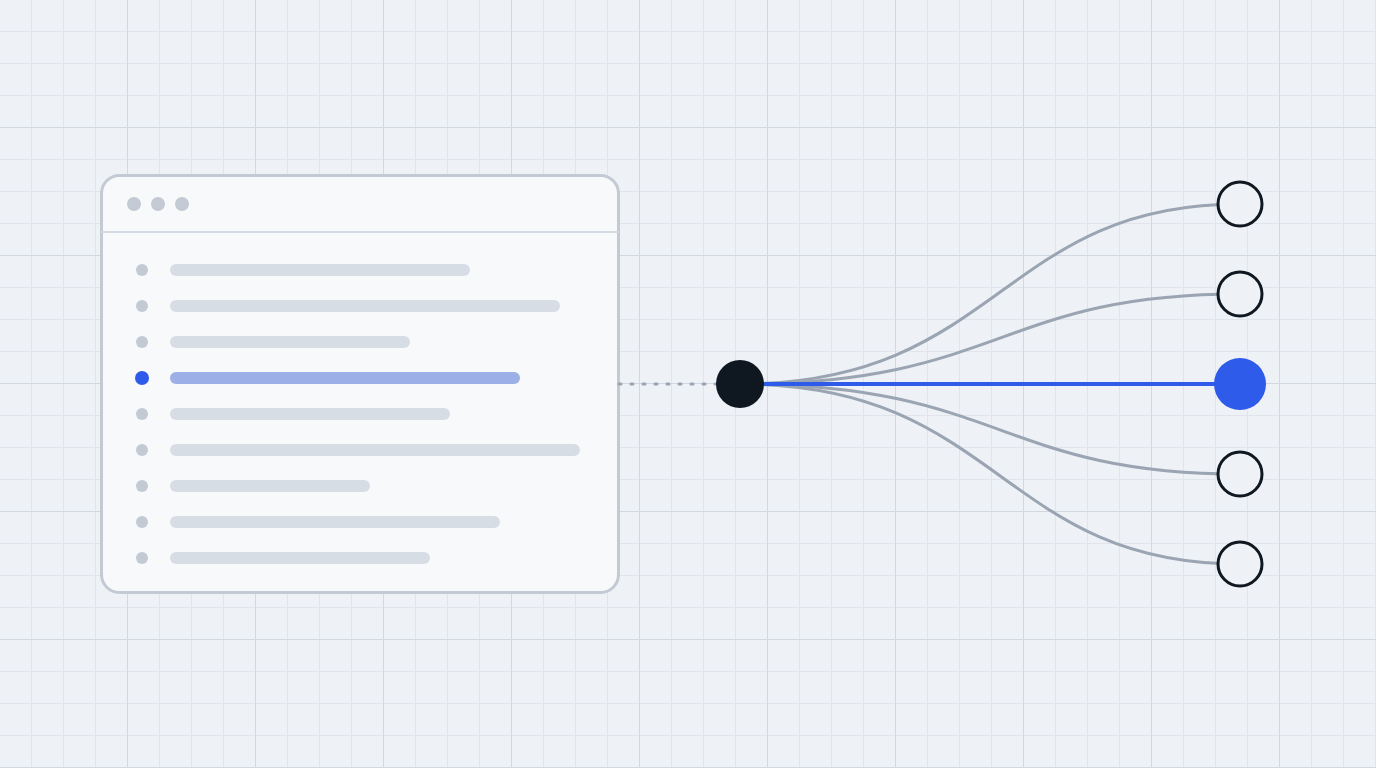
Multi-model platforms take a different approach. They combine semantic understanding of the data, statistical and behavioural models for baselining, and LLMs for reasoning and natural language interaction. The heavy lifting on raw data is handled by models that do not hallucinate, and the LLM is only asked to reason over a pre-narrowed, high-signal dataset. This is the architecture that Exaforce has built its AI SOC platform around, and it is increasingly the pattern that GigaOm, Gartner, and Latio are flagging as the durable approach for enterprise SOCs.
The distinction matters because it determines what the platform can actually integrate with. An LLM-only system needs a SIEM to do the data work first. A multi-model system can often replace large chunks of that SIEM workload, or at least stop you from paying for hot retention of data nobody ever queries.
Exaforce: A Multi-Model Agentic SOC Built for Integration
Exaforce sits in a category that did not really exist two years ago. It is not a SIEM, not a SOAR, and not a simple AI assistant bolted onto an existing platform. It is a full-lifecycle agentic SOC platform, available as SaaS or as a managed MDR service, built around what the company calls a Multi-Model AI engine and a family of task-specific agents called Exabots.
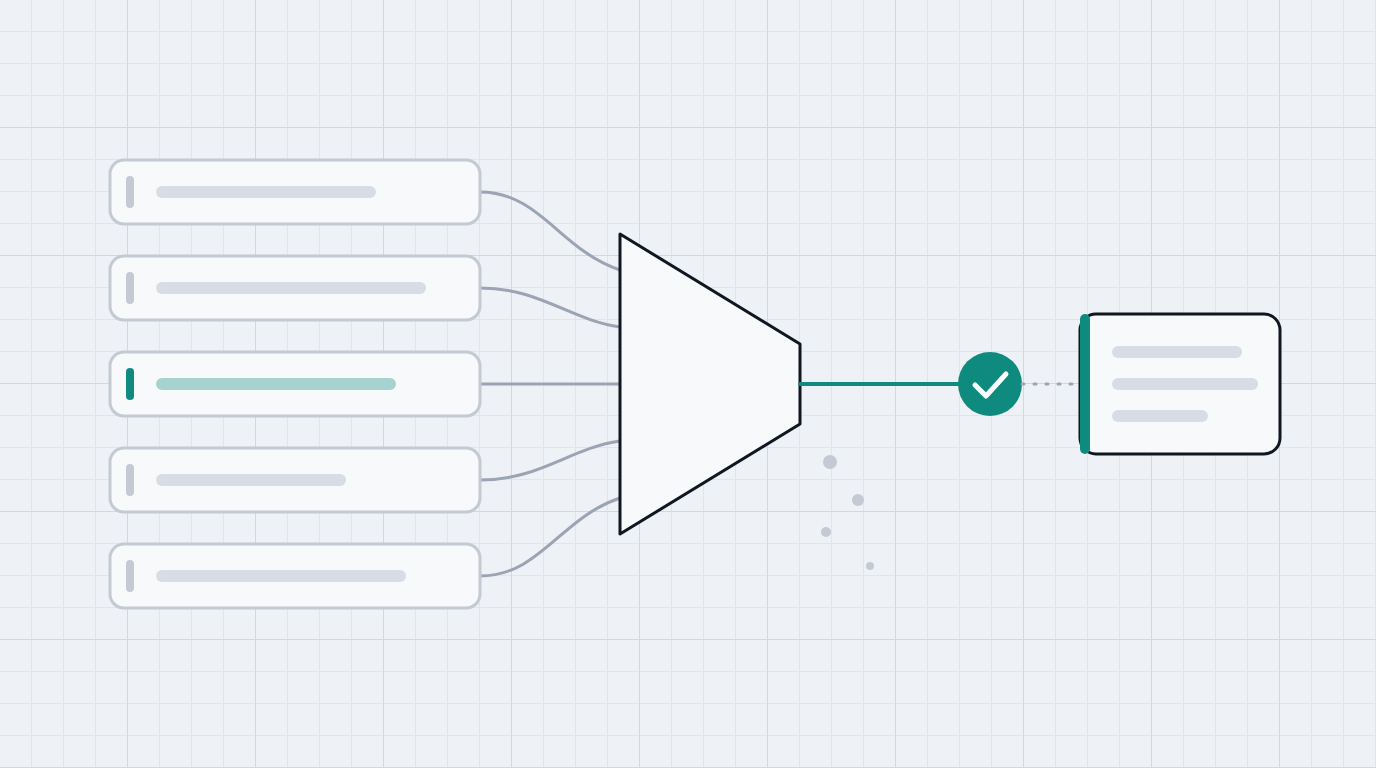
The integration story is what makes Exaforce relevant to teams that already have a SIEM investment. Exabot Triage ingests alerts from Splunk, Sumo Logic, and cloud-native detection services including AWS GuardDuty, Azure Identity Protection, CrowdStrike EDR, and Google Workspace phishing detections. It runs a full Tier 1 through Tier 3 investigation, classifies each alert as False Positive, Benign, or Needs Investigation, and returns the verdict with the reasoning chain attached. Customers running the platform have reported up to a seventy percent reduction in alerts surfaced to human analysts, and a fifty percent cut in investigation time for the cases that do get escalated.
The detection layer, Exabot Detect, covers ground that traditional SIEMs and UEBA tools tend to miss. It monitors IaaS and SaaS environments like AWS, Okta, OpenAI, and GitHub using behavioural baselines and contextual intelligence, rather than static rules. For teams whose detection engineering backlog has grown faster than their headcount, this removes a meaningful source of toil.
What matters for integration specifically is the data platform underneath. Exaforce unifies cloud, identity, SaaS, and endpoint telemetry into a single reliable view, with intelligent tiering that keeps hot data queryable while retaining full history at storage costs one customer reported as ninety percent lower than their previous SIEM. That is the lever that makes the rest of the platform work. Agents can only investigate what they can see, and the Advanced Data Explorer gives both the agents and human analysts a conversational and visual interface into every byte of telemetry the platform holds. Exaforce raised seventy-five million dollars in Series A funding in 2025 from Khosla Ventures, Mayfield, and Thomvest Ventures, and has been named a Leader and Outperformer in GigaOm’s Radar for SecOps Automation.
The Other Serious Contenders
Exaforce is not operating in a vacuum. Several other platforms deserve serious evaluation depending on where your stack sits today.
Microsoft Sentinel remains the default choice for organisations already heavily invested in the Microsoft ecosystem. Its Fusion correlation engine and UEBA capabilities are genuinely strong, and the Copilot integration lets analysts query security data in natural language without writing KQL. The trade-off is the gravitational pull toward Microsoft-only telemetry, which can be awkward if your cloud estate is multi-vendor.
CrowdStrike Falcon Next-Gen SIEM, paired with Charlotte AI Detection Triage, has become the obvious path for teams already running Falcon on their endpoints. Charlotte’s triage accuracy has been independently validated at over ninety-eight percent, and GigaOm named CrowdStrike a Leader and Fast Mover in its 2025 Autonomous SOC radar. The caveat is the familiar one: the deeper you are outside the Falcon ecosystem, the less seamless the experience becomes.
Palo Alto Cortex XSIAM takes the platform consolidation argument to its logical conclusion. It merges SIEM, XDR, SOAR, and attack surface management into one console, with over a thousand pre-built integrations and the new AgentiX suite of AI agents for threat intel, email investigation, endpoint forensics, and network response. It is powerful, and it is expensive, and it is best suited to large enterprises willing to standardise deeply on Palo Alto.
Splunk, now part of Cisco, has taken a different route. Rather than competing with the agentic SOC category head on, it has layered AI assistants and agents on top of its existing data lake. For organisations with years of Splunk SPL queries and dashboards, this preserves the investment while adding triage automation. The limitation is that Splunk’s AI layer still recommends more than it acts, which leaves analysts doing validation work that fully agentic platforms have already automated.
SentinelOne Singularity AI-SIEM, powered by the Singularity Data Lake and the Purple AI assistant, has gained real traction with teams that want a single vendor path from endpoint up to full SOC automation. Purple AI’s roughly forty percent attach rate on new SentinelOne licences tells you the market is responding.
Stellar Cyber’s Open XDR platform is worth a look for teams that want autonomous capabilities without replacing existing tools. Its Multi-Layer AI approach and vendor-agnostic integration model make it particularly useful for MSSPs and organisations with heterogeneous security stacks.
Radiant Security and Intezer Forensic AI SOC round out the mid-market picture, both leaning heavily on explainability and integrated log management as ways to reduce SIEM spend while still running comprehensive investigations.
What to Look For When You Evaluate
The vendor comparison matrices all start to blur after the third analyst report. The questions that actually matter in a proof of concept are narrower.
Ask how the platform reasons, not just what it automates. If the answer is “we pass the alert to an LLM,” you are looking at a thin wrapper. If the answer involves semantic models, behavioural baselines, and an explicit reasoning chain you can audit, you are looking at something more durable.
Ask what integration looks like on day thirty. Native connectors to your SIEM, your EDR, your identity provider, and your cloud control planes should be table stakes. The harder question is whether the platform can ingest your custom detection content and your tribal knowledge, or whether it forces you back to defaults.
Ask what happens at scale. Some platforms that perform beautifully at a few million events per day collapse at a few billion. The vendors running in enterprise-grade production, Exaforce among them, have been stress-tested at volumes that smaller teams will never generate but should still care about as a proxy for architectural soundness.
Ask about the pricing model. Per-alert, per-token, and data-volume pricing all create perverse incentives as your environment grows. Flat-rate or seat-based pricing aligns the vendor with your outcomes rather than your noise level.
Ask what the platform does when it is wrong. Explainability, rollback, human-in-the-loop modes, and audit trails are not nice-to-haves. They are the difference between a tool your SOC trusts and one it quietly stops using.
Where This Is Heading
The agentic SOC category is still early. Gartner’s Hype Cycle puts AI-driven SOC agents at the Technology Trigger stage, with one to five percent market penetration. That means most organisations are still on their first or second proof of concept, and the vendor landscape will look meaningfully different in eighteen months. What will not change is the underlying economics. Alert volumes are growing faster than security budgets, and no amount of traditional SIEM optimisation will close that gap. AI-driven integration, done properly, is the only realistic path to scale.
The platforms that win will be the ones that treat SIEM and SOC integration as a single problem rather than two. Exaforce’s bet on a multi-model engine with full-lifecycle agents is one expression of that. Palo Alto’s consolidation play is another. CrowdStrike’s endpoint-to-SOC arc is a third. The right choice for any given team comes down to where their data already lives, how much of their existing stack they want to preserve, and how far they are willing to trust an agent to act on their behalf.
For most security leaders reading this, the near-term move is the same. Pick two platforms that fit your stack, run a thirty-day proof of concept against real production alerts, and measure the time-to-verdict, the false-positive reduction, and the analyst hours recovered. The numbers will tell you more than any vendor deck ever will.